
If you are the proud parent of a dog with a sensitive stomach, you already know the routine. You spend hours reading ingredient labels in the pet store aisle. You treat every new snack like a high-stakes science experiment. And you live in constant fear of the midnight bathroom run because a new treat didn’t sit quite right with your pup.
Finding a long-lasting chew that keeps your dog happily occupied without triggering a bout of diarrhea or vomiting can feel nearly impossible. Traditional options like rawhide are notorious for causing severe digestive blockages, while heavy artificial chews are often packed with synthetic preservatives that irritate delicate intestinal linings.
Lately, you’ve probably seen a lot of buzz around Himalayan cheese treats. But it leaves you wondering: are yak chews safe for dogs who struggle with digestive issues, or are they just another trigger waiting to happen?
Let’s dive deep into the science, the traditional crafting process, and exactly how these ancient Himalayan treats interact with a dog’s sensitive digestive ecosystem.
What Exactly Is a Yak Chew?
Before evaluating how they affect a sensitive belly, it helps to understand what these chews actually are. Unlike mass-produced commercial treats manufactured in highly industrialized facilities, authentic yak chews are rooted in a centuries-old Himalayan recipe known as Chhurpi.
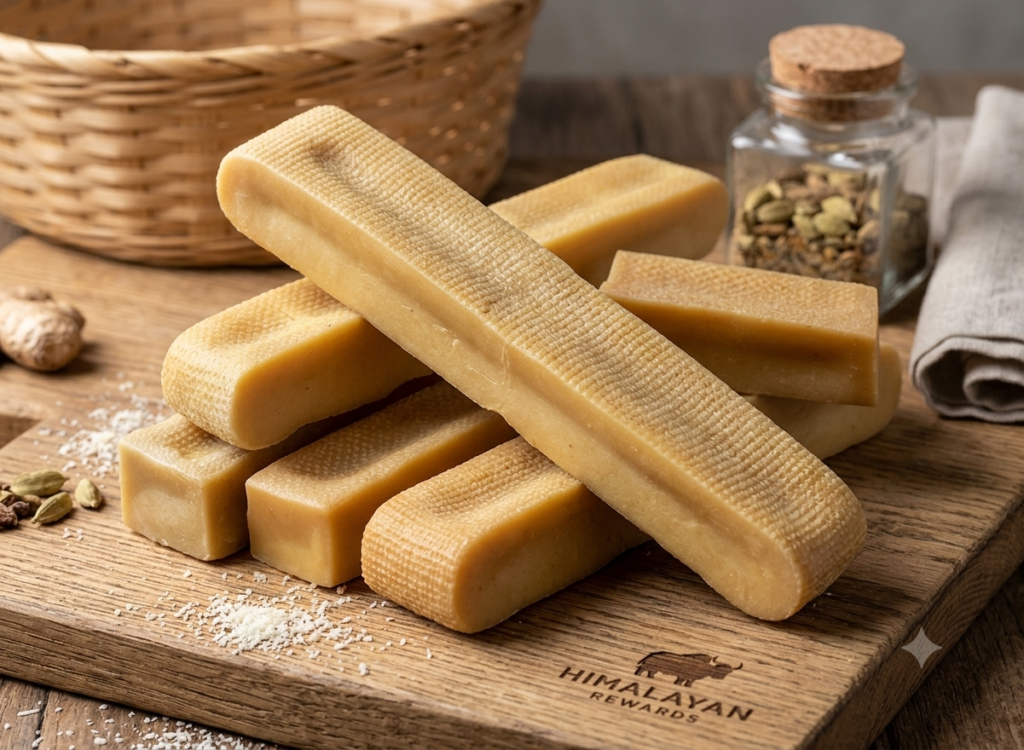
Traditionally, Himalayan farmers boil pure yak and cow milk, then coagulate it using a tiny amount of all-natural lime juice and salt. The solid curds are separated, wrapped in burlap, and pressed heavily to squeeze out every drop of moisture. Finally, the cheese blocks are smoke-dried over wood fires for several weeks until they become incredibly dense, hard, and durable.
The result is a 100% natural, limited-ingredient chew. There are zero synthetic chemicals, zero artificial binding agents, and absolutely no mystery fillers. For a dog with food sensitivities, a short, transparent ingredient list is always the first line of defense.
The Big Question: Are Yak Chews Safe for Dogs with Sensitive Stomachs?
The short answer is yes, authentic yak chews are highly safe and exceptionally gentle on most dogs with sensitive stomachs.
However, because they are made from milk, many pet parents are initially hesitant. After all, standard dairy is a classic trigger for canine gas, bloating, and loose stools. To understand why yak chews behave differently in a dog’s gut, we have to look closely at three specific factors: lactose levels, fat content, and overall digestibility.
1. The Secret of Zero Lactose (Virtually!)
Most adult dogs are lactose intolerant. They lack sufficient levels of lactase, the enzyme required to break down the sugars found in fresh milk. If you give a sensitive dog a slice of American or cheddar cheese, you are likely asking for trouble.
So, are yak chews safe for dogs if they are made entirely of milk?
Surprisingly, yes. The secret lies in the traditional fermentation and pressing process. As the cheese curds are pressed and dried over weeks, the liquid whey which carries the vast majority of the lactose is completely removed. The tiny remaining amount of lactose is systematically broken down by natural beneficial bacteria during the curing phase.
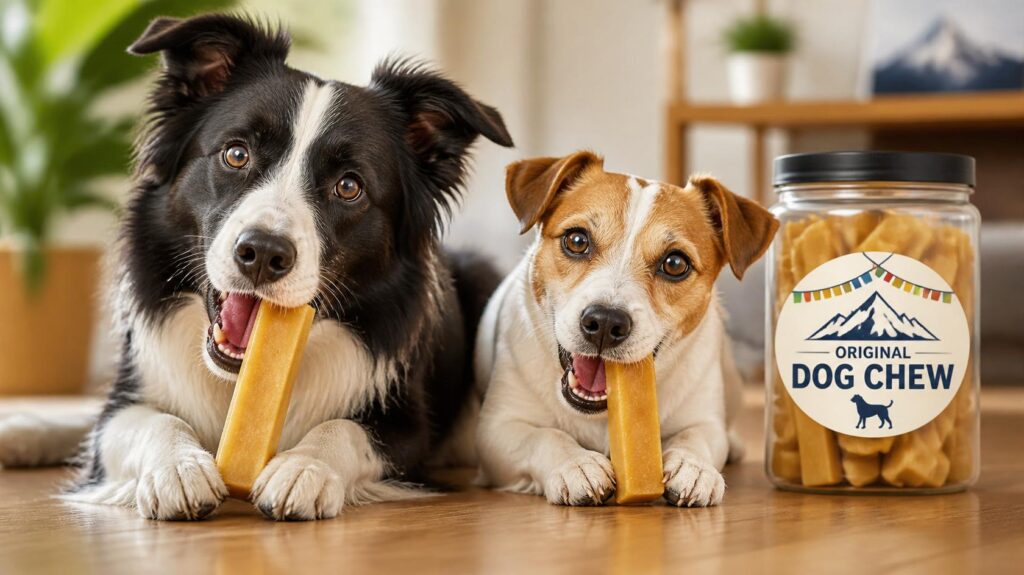
By the time the chew reaches your dog, it is virtually lactose-free. This allows your pup to enjoy the rich, satisfying flavor of cheese without the gastrointestinal distress associated with dairy.
2. Low Fat is the Friend of a Sensitive Gut
High-fat treats are incredibly hard on a dog’s digestive tract. When a dog ingests an excess of rich fats, the pancreas has to work overtime to produce lipase enzymes. In dogs with sensitive systems, high-fat snacks can lead to acute digestive inflammation or even trigger a serious condition called pancreatitis.
Many premium dog chews on the market, such as certain pork products or marrow bones, carry a deceptively high fat content. Authentic yak chews, on the other hand, are naturally lean. The traditional skimmed-milk process keeps the overall fat content remarkably low, usually sitting right around 1% to 7%. Combined with the traditional curing and hardwood smoking process, which helps reduce residual lactose, this low-fat profile makes them an excellent, low-risk alternative for keeping a sensitive dog entertained without overloading their system. Learn more in our guide to How Traditional Hardwood Smoking Breaks Down Dairy Lactose.
3. High Digestibility vs. The Danger of Rawhide
When evaluating whether are yak chews safe for dogs, we have to look at what happens after the chew is swallowed.
Many traditional chew options, particularly rawhide, are essentially indigestible. Rawhide doesn’t break down easily in gastric juices; instead, it tends to expand in the stomach, creating a massive risk for dangerous intestinal blockages that require emergency surgery.
Yak chews behave completely differently. As your dog gnaws on the chew, their warm saliva slowly softens the edges, allowing them to scrape away tiny, fully digestible flakes of protein. If your dog happens to swallow small fragments, their stomach acids can break down the compressed cheese naturally, reducing the risk of a foreign-body obstruction.
Comparing Chews for the Sensitive-Stomach Pup
To see how these Himalayan treats hold up against other popular market options, let’s look at a quick comparison of common long-lasting chews:
| Chew Type | Digestibility Level | Risk of Stomach Upset | Common Concerns |
| Authentic Yak Chews | High | Very Low | Hard texture requires gradual introduction |
| Traditional Rawhide | Extremely Low | High | Intestinal blockages, chemical processing |
| Bully Sticks | Medium to High | Moderate | High calorie count, can be too rich/greasy |
| Splintering Animal Bones | Zero | High | Sharp shards, dental fractures, bacterial contamination |
How to Safely Introduce a Yak Chew to Your Dog?
Even though these treats are intrinsically gentle, introducing any new item to a dog with a sensitive stomach requires a thoughtful approach. If your dog’s gut flora isn’t used to a highly concentrated protein treat, letting them chew for hours on day one might cause mild, temporary looseness simply from the novelty of the food.
Follow these simple steps to ensure a completely seamless introduction:
Step 1: Start with Monitored, Short Sessions
For the first few days, limit your dog’s chewing time to just 10 or 15 minutes. Once the time is up, gently swap the chew for a favorite toy and put it away. Watch your dog over the next 24 hours for any signs of flatulence or loose stools. If their system handles it beautifully, you can gradually increase the duration of their chewing sessions.
Step 2: Choose the Correct Size

Always pick a chew that matches your dog’s current weight and jaw strength. A chew that is too small poses a distinct choking hazard if an enthusiastic dog attempts to swallow it whole. When in doubt, always size up. A larger chew forces your dog to use their back molars to grind down the edges slowly and safely, which also provides excellent dental scraping benefits to lower plaque buildup.
Step 3: Handle the End Piece Responsibly
When a yak chew is ground down to a small, one-inch stub, it becomes a potential choking hazard. Do not leave this small piece lying around. Instead, take the stub away and use the classic kitchen trick: soak it in warm water for a few minutes, then pop it in the microwave for 30 to 45 seconds. The cheese will puff up like a large, crunchy, easily digestible cracker that your dog can crunch down safely without any swallowing risks. To see how to safely upcycle smaller remnants into a light, crispy biscuit that is highly digestible, see our safe microwave end piece guide.
When Should You Avoid Yak Chews?
While answering are yak chews safe for dogs yields a positive response for the vast majority of pets, there are a couple of rare exceptions where you should hold off:
- Severe Dairy Allergies: Lactose intolerance is an inability to digest milk sugars, which yak chews solve. However, if your dog has a diagnosed, systemic allergy to milk proteins (like casein), they may still react to a yak chew.
- Fragile or Cracked Teeth: Because these chews are cured to be incredibly durable, they are very firm. Senior dogs with decaying dental health or young puppies under six months old who still have delicate deciduous teeth might find them too hard.
The Clear Choice for Mindful Pet Parents
When you are managing a dog with a sensitive stomach, consistency and purity are everything. You need treats that eliminate the guesswork, giving your dog the mental stimulation and dental care they naturally crave without sacrificing their digestive comfort.
By opting for a limited-ingredient, low-fat, and virtually lactose-free option, you are protecting their gut while supporting their natural instinct to chew.
At Original Chews, we specialize in sourcing premium, authentic Himalayan treats crafted using time-honored traditions. Our chews contain absolutely no artificial additives, fillers, or binding agents, just pure, pasture-raised nourishment that is exceptionally kind to delicate bellies.
True digestive safety comes down to a zero-chemical manufacturing philosophy. While low-grade imitations use chemical softeners and artificial thickeners to speed up production, our fair-trade dairy cooperatives in Nepal rely strictly on centuries-old heritage methods. We keep internal moisture levels strictly below 12% to guarantee a clean, shelf-stable structure without relying on synthetic preservatives that can irritate your dog’s stomach lining.
Frequently Asked Questions (FAQs)
1. Can a yak chew cause diarrhea in dogs?
While highly digestible, any new high-protein treat can cause temporary loose stools if introduced too quickly. To prevent stomach upset, limit your dog’s first few chewing sessions to 10 or 15 minutes to let their gut flora adjust naturally.
2. At what age can puppies have yak chews?
It is best to wait until a puppy is at least six months old and has their permanent adult teeth. Because these treats are exceptionally dense, they can potentially fracture or damage delicate baby teeth.
3. How long do these Himalayan chews typically last?
For an average chewer, a single stick can last from several days to a few weeks. Even for aggressive chewers, they offer significantly more durability and mental stimulation than standard dental sticks or dehydrated treats.
4. Do yak milk dog treats expire?
Thanks to the traditional moisture-extraction process, they have a shelf life of two to three years when stored in a cool, dry place. Between chew sessions, simply let the stick air dry completely and store it in an open, breathable spot.
5. What should I do with the small leftover end piece?
Take the small stub away before it becomes a choking hazard. Soak it in warm water for 5 minutes, then microwave it for 30 to 45 seconds. It will puff up into a safe, crunchy cheese cracker your dog can easily digest.Managing New Treat Introductions to Sensitive Packs