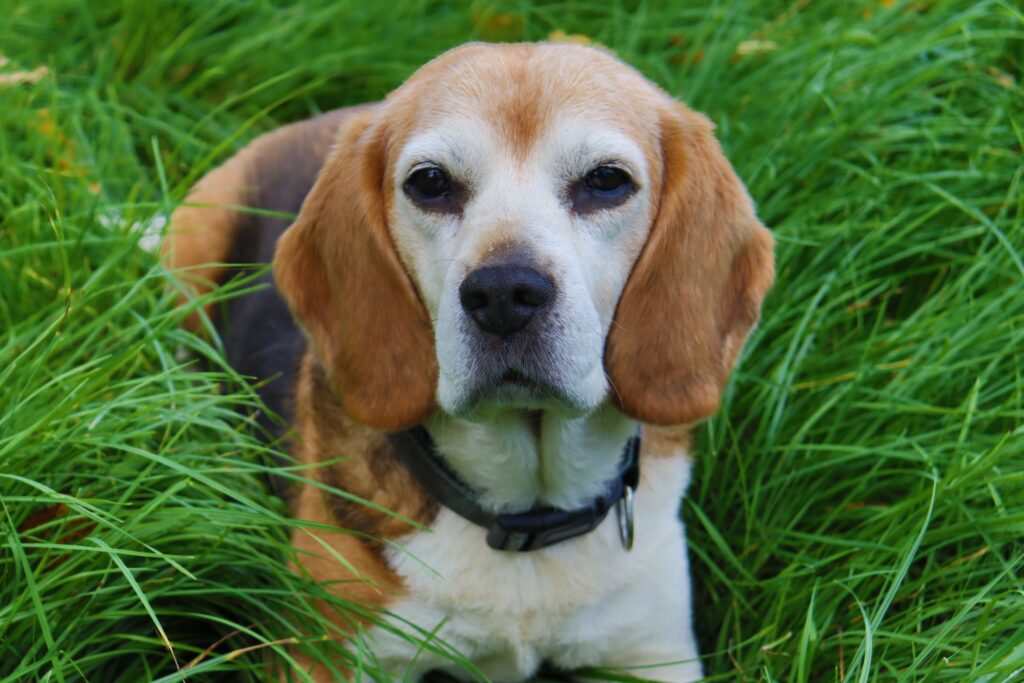
Beagles run on their noses. Long before they’re anything else, they’re scent hounds, and that single trait shapes almost everything about how they behave indoors, including how they chew. A Beagle doesn’t sniff something and move on the way other breeds might. It investigates, and if the investigation ends with the item in its mouth, that’s just Tuesday.
This is the reason so many owners eventually go looking for a proper yak chew for Beagle dogs instead of restocking the same soft treats every week. Beagles go through low quality chews at an alarming rate. Something dense and slow wearing solves that problem in a way most pet store shelves simply don’t.
What a Himalayan Yak Chew Actually is?
A Himalayan yak chew starts as yak milk, usually blended with a small amount of cow milk, salt and lime juice. The mixture is simmered down into a firm block and left to dry into a long lasting stick. There’s no synthetic binding agent involved and nothing artificial added during the process. It’s essentially a hardened dairy product, closer in nature to a very firm cheese than to a manufactured pet treat.
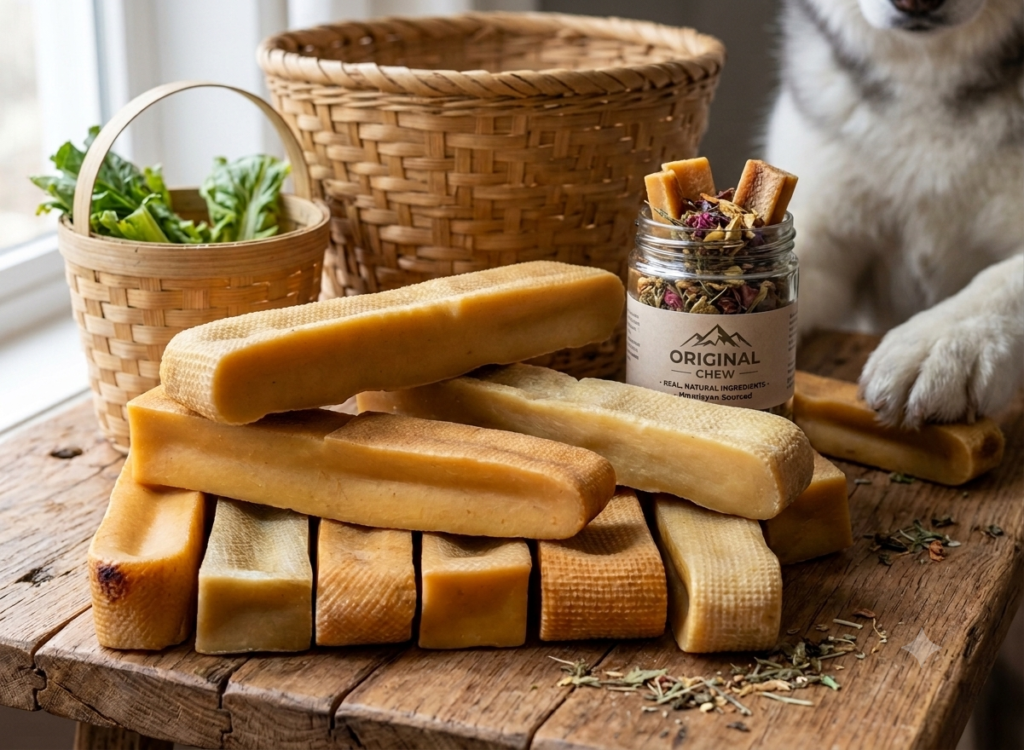
That density is exactly what makes a good yak chew for Beagle owners worth the switch. Beagles are known for finishing soft treats almost instantly, and a chew that resists that kind of speed forces a slower, more deliberate pace.
Why This Breed Responds So Well to a Dense Chew?
According to the American Kennel Club, Beagles were originally bred to hunt in packs and are known for being energetic, food motivated and prone to destructive habits when left without enough to do. That combination of traits explains a lot about why a yak chew for Beagle households works better than most alternatives.
Food motivation runs deep. Beagles rarely nibble. They tend to grab and gulp, which is part of why soft treats disappear so fast and why hard, slow wearing chews are a safer match for this breed’s eating style.
Boredom shows up as chewing. A Beagle without enough mental engagement will find something to do with its mouth whether you’ve approved of it or not. A long lasting yak chew for Beagle enrichment routines gives that energy somewhere useful to go.
Weight is a common concern. Beagles gain weight easily, and treats that vanish in seconds add calories without much payoff. A yak chew lasts long enough that the calorie to enjoyment ratio works far better than most biscuit style snacks.
How a Yak Chew Compares to What’s Already in Your Cupboard?
Rawhide softens quickly once it’s wet, and a determined Beagle can tear off a piece large enough to become a genuine choking risk. If you’re considering rawhide as an alternative, our guide to The Hidden Hazards of Thermally Bleached Rawhide Strips explores the potential safety concerns and explains why many dog owners are switching to more natural, long-lasting chews.
Bully sticks are gentler on digestion but rarely last more than a single sitting. Pig ears disappear even faster and offer almost no lasting engagement. A yak chew for Beagle dogs sits in a different category. It doesn’t soften the way rawhide does, it lasts considerably longer than a bully stick, and the density itself does most of the safety work by preventing large pieces from breaking off. For a breed that tends to eat first and think later, that built in pacing matters more than it might for other dogs.
Using It as a Focus Tool, Not Just a Snack
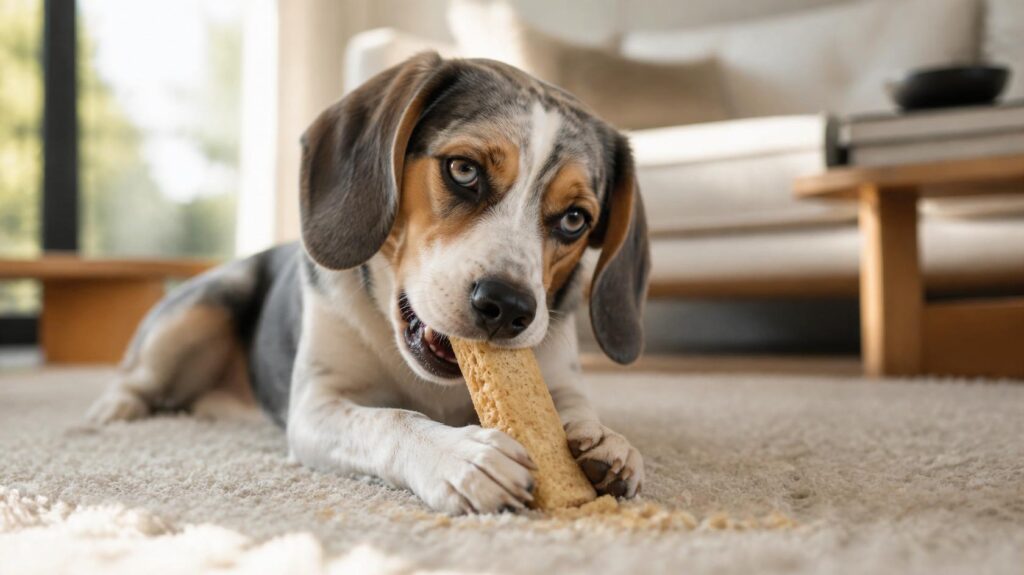
Anyone who’s tried to train a Beagle knows the nose usually wins. A new scent entering the room can undo ten minutes of focused work in an instant. Some owners have found that offering a yak chew for Beagle settle routines, during crate time, after a walk, or when guests arrive, gives that restless attention something worth staying put for.
It isn’t a substitute for actual training, but paired with basic obedience work, it can noticeably shorten how long it takes a wound up Beagle to settle after an exciting moment in the house.
How Long One Chew Should Last?
Most Beagles work through a medium sized chew over one to two weeks of supervised sessions, sometimes longer depending on how determined the individual dog is. Because Beagles tend to be persistent rather than especially powerful chewers, the wear is usually steady rather than sudden, which is part of why a well chosen yak chew for Beagle routines tends to outlast almost everything else in the treat drawer.
Getting the Size Right
Beagles typically weigh between 20 and 30 pounds, placing most of them in the small to medium chew range, though individual chewing intensity still matters more than weight alone.
Puppies and Beagles under 15 pounds do best with puppy grade chews, which are softer on developing teeth. Standard adult Beagles between 20 and 30 pounds usually do well with a small to medium chew. Particularly determined chewers may benefit from sizing up to medium large, which stretches out how long the chew lasts.
A simple way to judge fit is to compare the chew’s length to the distance between your Beagle’s nose and the back of its jaw. Anything noticeably shorter becomes a hazard as it wears down.

The Microwave Trick
Once the chew wears down to roughly the size of a golf ball, don’t let your Beagle finish it off and don’t throw it away either. A short 30 to 60 second stint in the microwave, watched closely, causes it to puff up into a light, crunchy, fully digestible piece similar to popcorn. Given how food driven this breed is, it’s often the part they get most excited about.
Safety Still Comes First
Yak chews are one of the safer long duration options available, but a few basics still apply. VCA Animal Hospital notes that treats and chews with a texture and consistency that actually encourage gnawing tend to satisfy a dog’s need to chew far better than items small enough to be swallowed whole, which is a useful reminder for any breed that gulps rather than nibbles.
A few habits worth keeping in mind with any new yak chew for Beagle dog:
Supervise the first several sessions closely. Remove and microwave the chew once it’s small enough to swallow. Introduce it gradually if your dog hasn’t had a dairy based chew before. Skip it entirely if a vet has flagged a dairy allergy or digestive condition. To learn how to avoid ambient environmental moisture damage during storage, read our guide to preventing yak chew mold.
A Word on Weight and Nutrition
Because Beagles gain weight so easily, treat choice matters more here than for most breeds. Yak chews are naturally lean and high in protein, and since they take real time to finish, your dog gets far more satisfaction per calorie than it would from a treat that’s gone in three bites.
Why We Built Ours With This Breed in Mind?
Every chew we make comes from small farms in Nepal and sticks to four ingredients: yak milk, cow milk, salt and lime juice. For a breed as food driven and scent obsessed as the Beagle, that simplicity is the entire reason it works. If your dog has torn through every other chew you’ve tried, a properly sized yak chew for Beagle dogs might be the first one that actually lasts.
Frequently Asked Questions
1. Is a yak chew safe for Beagle puppies?
Yes, as long as you choose puppy specific sizing and hardness. Wait until your Beagle has a full set of adult teeth before switching to a standard adult hardness chew.
2. How often should I offer my Beagle a yak chew?
Most owners keep one chew active at a time rather than offering several a week. Because it lasts so long, it functions more like ongoing enrichment than a daily snack.
3. Do yak chews smell strong?
Not really. Most owners find them noticeably less odorous than bully sticks or traditional rawhide, which makes them easier to live with indoors.
4. Will a yak chew help with my Beagle’s weight?
It can help indirectly. Because the chew lasts so long and is naturally lean, it offers more enjoyment per calorie than fast disappearing treats, which matters for a breed this prone to weight gain.
5. What if my Beagle swallows a large piece?
Watch closely for the next 24 hours for vomiting, discomfort or lethargy, and call your vet if anything seems off. This is uncommon with correct sizing and supervision, but worth taking seriously given how quickly this breed tends to eat.