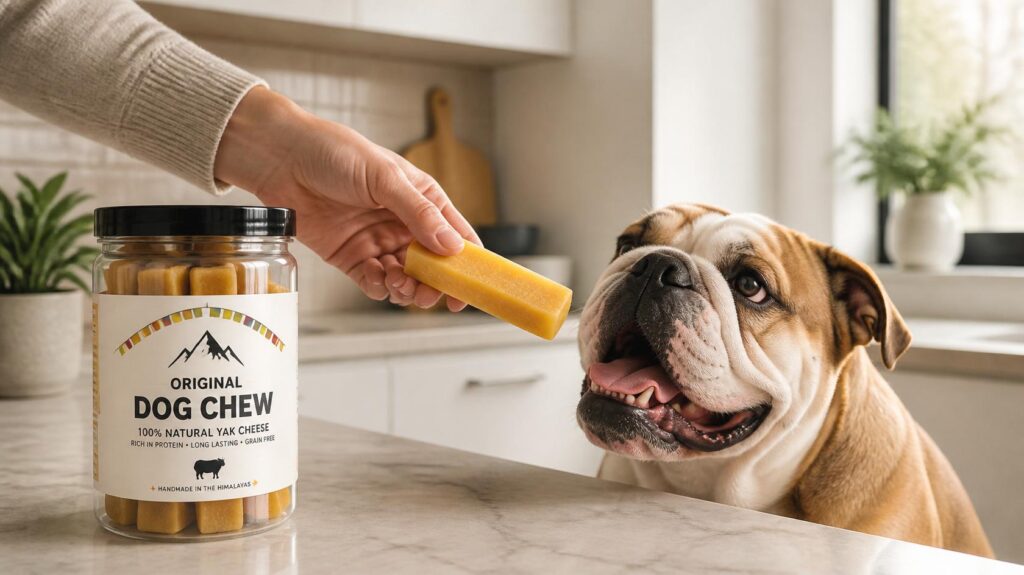
English Bulldogs are not built the way most dogs are. The undershot jaw, the folded skin, the stocky low set body, all of it comes from generations of selective breeding, and all of it changes how this breed eats, breathes and chews compared to almost anything else in the yard. Owners often assume a laid back dog needs a laid back chew. In reality, this breed’s anatomy makes the choice more important, not less.
That is where a proper yak chew for English Bulldog dogs earns its place ahead of the usual pet store options. It is dense enough to hold up, gentle enough for a stomach that gets upset easily and shaped in a way that actually works with this breed’s unusual bite instead of fighting against it.
The Underbite Problem Nobody Talks About
Most chew guides mention flat faces and narrow airways, and both matter, but there is a second issue that gets skipped just as often: the Bulldog’s jaw structure itself. The lower jaw extends past the upper one, which changes how the front teeth meet and how the dog naturally grips something in its mouth. Softer chews tend to get mashed rather than gnawed, and pieces can slide loose before they are actually broken down.
A dense yak chew for English Bulldog jaws gives enough resistance that the dog has to work the chew along the side teeth rather than just mashing it at the front, which is a much safer and more natural chewing motion for this bite pattern.
What Goes Into a Himalayan Yak Chew?
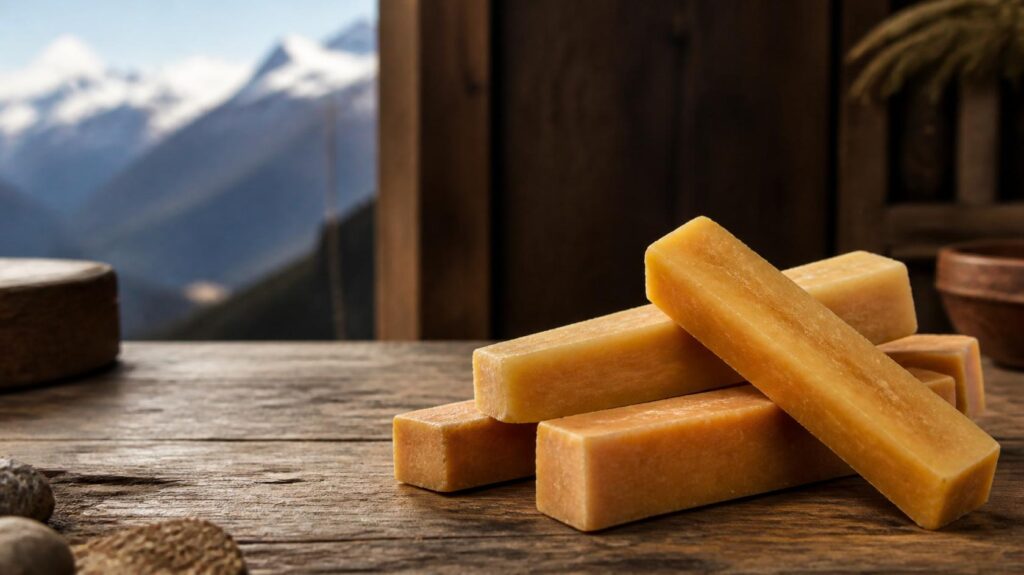
The recipe has not changed much in generations. Yak milk, blended with a bit of cow milk, salt and lime juice, gets simmered down into a firm block and dried into a hardened stick. Four ingredients, no fillers, nothing synthetic holding it together. The result is closer to an aged cheese than a manufactured pet treat, and it wears down slowly instead of breaking apart in large chunks. It’s natural unbleached golden amber color reflects the traditional drying process rather than artificial bleaching, as explained in our guide on Why Unbleached Golden Amber Is the True Color of Chhurpi.
Why Bulldogs Specifically Benefit?
Breathing changes how they should eat and chew. According to VCA Animal Hospitals, brachycephalic dogs have shortened skull bones that alter the soft tissue structures around the airway, which is the underlying cause of brachycephalic airway syndrome in breeds like the Bulldog. A chew that requires slow, steady gnawing rather than fast tearing puts far less strain on a dog already working harder than most to breathe comfortably.
Heat tolerance is limited. Bulldogs overheat faster than most breeds because panting, their main cooling method, is less effective with a shortened airway. PetMD notes that dogs with this condition may struggle to exercise or experience real breathing difficulty in hot weather. Chewing itself is low effort, but it should still happen somewhere cool and calm rather than outside on a warm afternoon.
Weight creeps up easily. Extra pounds sit harder on a Bulldog’s joints and breathing than on a leaner breed. Because a yak chew takes real time to finish, it delivers a lot of enrichment without piling on calories the way biscuit treats do.
The stomach is often sensitive. Gas and mild digestive upset are common complaints among Bulldog owners, frequently tied to rich or heavily processed treats. A simple four ingredient chew tends to sit far better than something loaded with additives.
How This Compares to What Most Owners Already Buy?
Rawhide softens fast once it gets wet and can tear into large, floppy pieces that are easy to gulp down, which is a real concern for a breed with an already narrow airway. Bully sticks are gentler on digestion but usually disappear within one sitting, and the smell tends to hang around indoors longer than most people expect. Pig ears break apart under light pressure and offer almost nothing in terms of lasting engagement.
A yak chew for English Bulldog dogs avoids most of that. It does not tear the way rawhide does, it lasts far longer than a bully stick, and the smell is faint enough that it will not take over a living room. For a breed already dealing with enough physical quirks, that predictability counts for a lot.
Drool, Mess and What It Means for Chew Choice?
Bulldogs drool more than most breeds, especially during and right after eating or chewing. This is normal and mostly harmless, but it is worth factoring in when deciding where your dog chews. A firm chew that does not disintegrate keeps mess contained to saliva rather than crumbled bits of treat spread across the floor, which is a small but genuinely appreciated benefit for anyone who has cleaned up after a Bulldog before.
How Long a Chew Should Realistically Last?
Bulldogs chew at a slower, more relaxed pace than high energy breeds, so a medium sized chew often lasts two to three weeks with regular supervised sessions. Some dogs stretch that even further if chewing happens in short bursts throughout the week instead of one long session. That slower pace is actually a safety advantage here since it lowers the odds of a large piece breaking off unexpectedly.
Sizing It Correctly
Adult English Bulldogs typically weigh between 40 and 55 pounds, but weight alone does not tell the whole story given the breed’s stocky build and shortened jaw. Puppies and Bulldogs under 25 pounds do best with a puppy grade chew, softer on developing teeth. Standard adults in the 40 to 55 pound range usually do well with a medium chew. Dogs with a stronger chewing habit can size up slightly, mainly to stretch out how long the chew lasts rather than because of raw jaw strength.
One detail worth noting for this breed specifically: avoid anything especially thin. A slightly thicker yak chew for English Bulldog dogs is safer once it starts wearing down, since thin pieces become easy to swallow whole far sooner than a thicker one does.
The Microwave Trick
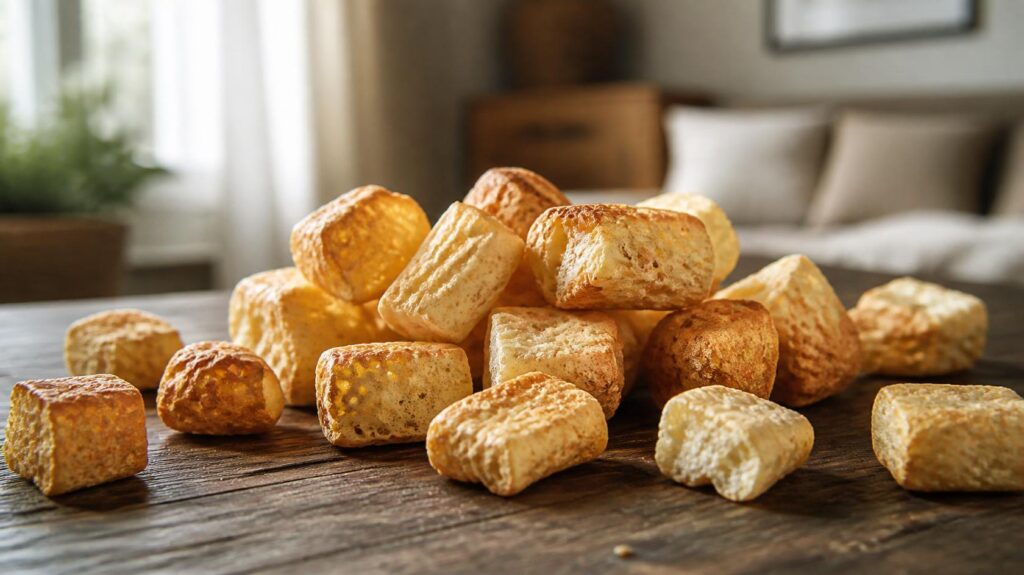
Once the chew wears down to roughly the size of a golf ball, take it away before your Bulldog gets the chance to swallow it. Microwave the piece for 30 to 60 seconds and watch it puff up into a light, crunchy snack similar to popcorn. It uses up the entire chew with nothing wasted, and most Bulldogs treat it like a bonus treat rather than leftovers.
Safety Habits Worth Building In
Supervise every new chew, especially the first several sessions, and keep an eye on breathing rather than just the chew itself. Take it away and microwave it once it reaches a swallowable size. Keep chewing sessions in a cool, comfortable spot, since this breed regulates heat poorly even during low effort activity. Introduce it slowly if your dog has not had a dairy based chew before, and skip it entirely if a vet has flagged a dairy allergy or ongoing digestive issue.
To learn how to avoid ambient environmental moisture damage during storage, read our guide to preventing yak chew mold.
A Quick Note on Diet
Yak chews are naturally high in protein and low in fat, which suits a breed this prone to weight gain. They are not a meal replacement, but as a slow, long lasting treat they add very little to a Bulldog’s daily calorie count compared to something that disappears in ten seconds.
Why We Built This With the Breed’s Quirks in Mind?
Every chew we make comes from small farms in Nepal and sticks to the same four ingredients: yak milk, cow milk, salt and lime juice. For a breed dealing with a sensitive stomach, a tricky bite and a body that overheats easily, that simplicity is the whole reason it works as well as it does. If your Bulldog has never shown much interest in chews, or you have held off because of choking worries, a properly sized yak chew for English Bulldog dogs is worth trying.
Not sure which size to start with? Our sizing guide takes about two minutes to walk through.
Frequently Asked Questions
1. Is a yak chew safe for English Bulldog puppies?
Yes, as long as you choose puppy specific sizing and softness. Wait until your Bulldog has a full set of adult teeth before switching to a standard adult hardness chew.
2. Does the Bulldog’s jaw shape make chewing harder?
Not with the right chew. A dense texture actually works better with the breed’s undershot bite than soft treats do, since it encourages gnawing along the side teeth instead of mashing at the front.
3. How often should I offer my Bulldog a yak chew?
Most owners keep one chew active at a time rather than several a week. Since it lasts so long, it functions more like ongoing enrichment than a daily snack.
4. Can chewing overheat my Bulldog?
Chewing itself is low effort, but this breed regulates heat poorly overall. Keep sessions in a cool, comfortable spot rather than outside on a hot day, and watch for heavy panting or fatigue.
5. What if my Bulldog swallows a large piece?
Watch closely for the next 24 hours for vomiting, discomfort, unusual breathing or lethargy, and call your vet right away if anything seems off. This is uncommon with correct sizing and supervision, but always worth taking seriously given this breed’s airway sensitivity.