
Yak chews last longer, have almost no odor, and carry a lower risk of digestive upset, while bully sticks are softer, break down faster, and carry a lower risk of tooth fracture. Neither is universally the better choice. The right one depends on how your dog chews, their dental history, and how often you want to replace the chew.
Why This Comparison Matters?
Owners often assume “natural dog chew” means one category, when in reality yak chews and bully sticks come from completely different parts of the animal, are processed in completely different ways, and behave completely differently in a dog’s mouth. Picking between them without understanding those differences is how owners end up with a chew that is either too hard for their dog’s teeth or gone in ten minutes and back to square one.

We sell yak chews, not bully sticks, and it would be easy to write this comparison as a sales pitch. We are not going to do that. Bully sticks are a legitimate, safe option for a lot of dogs, and there are situations where we would tell you honestly that a bully stick is the better fit. This guide is meant to help you figure out which one actually suits your dog, not to talk you out of the other option.
What Each Chew Actually Is
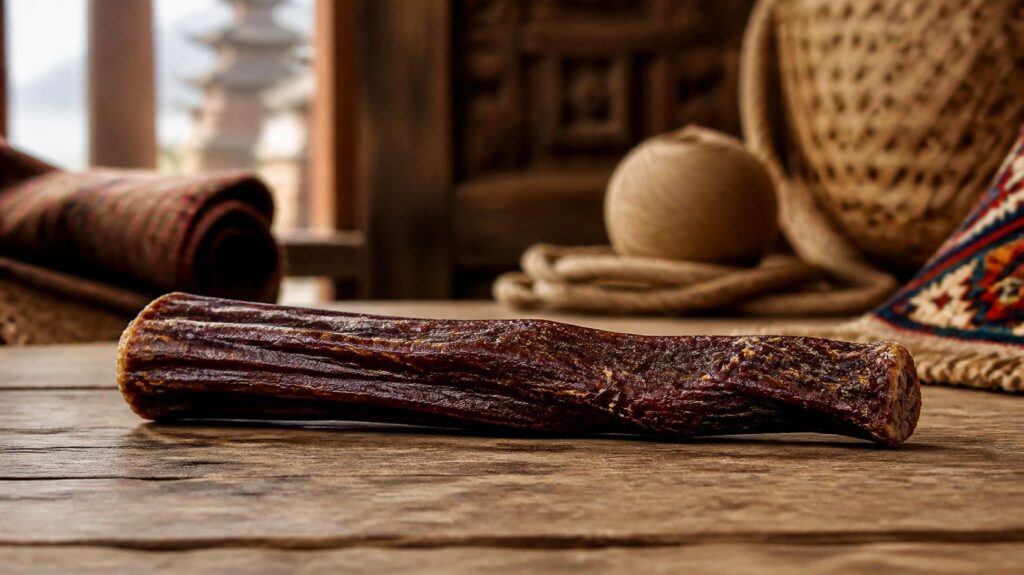
A yak chew, also called a Himalayan chew or chhurpi, is made from yak milk, often blended with cow milk, that is curdled, pressed, and slow cured over wood smoke until it hardens into a dense block.
A bully stick is a dried bull or steer pizzle. It is a single ingredient product in the same way a yak chew is, but it comes from a completely different part of the animal and is processed by drying or baking rather than curing over smoke.
Side by Side Comparison
| Factor | Yak Chews | Bully Sticks |
| Hardness | Hard, softens gradually as chewed | Soft to medium, softens quickly |
| Typical lifespan | Days to several weeks depending on chewing intensity | Minutes to a few hours for most dogs |
| Odor | Very low | Noticeable, especially unprocessed varieties |
| Tooth fracture risk | Present in aggressive chewers, lower than antlers | Very low |
| Choking risk | Mainly from the softened end nub | Mainly from the last few inches once soft |
| Fat content | Relatively low | Varies by brand, generally low to moderate |
| Best suited for | Moderate to strong chewers without a history of tooth fracture | Puppies, gentle chewers, dogs with dental sensitivity |
Durability and Chew Time
This is where yak chews have a clear, measurable advantage. Because the block is dense and cures over months rather than days, most dogs take considerably longer to work through a yak chew than a bully stick of comparable size.
For an owner who is tired of replacing a chew every single day, or who has a dog that goes through bully sticks in one sitting, a yak chew is usually the more practical and more cost effective option over time.
Odor and Household Cleanliness
Bully sticks have a distinct smell that some owners do not mind and others cannot stand, particularly indoors. Yak chews are cured over smoke rather than simply dried, which leaves them with very little odor. If household smell is a deciding factor for you, this is one of the more clear cut differences between the two, something we go into more in Himalayan Chhurpi vs Bully Sticks: The Odor Lifespan and Cleanliness Showdown.
Safety Comparison
Tooth fracture risk
Yak chews are harder than bully sticks, which means they carry a real, if generally low, risk of tooth fracture in dogs who bite down hard rather than gnaw gradually. The American Veterinary Dental College has published general guidance on how chew hardness relates to fractured teeth, and it is worth reading if your dog has ever cracked a tooth before. Bully sticks are soft enough that this risk is close to negligible. If your dog already has a history of dental fractures, a bully stick is the more conservative recommendation, and we would tell you that honestly even though it is not our product.
Choking risk
Both chews carry a choking risk once they wear down to a small enough piece to be swallowed whole. With yak chews, this is the softened nub near the end. With bully sticks, it is the last few inches once they become soft and pliable. Supervision and timely removal matter equally for both.
Digestibility
Bully sticks are almost entirely digestible protein, which is one of their genuine strengths. Yak chews are also generally well tolerated, but as a dairy product, some dogs with dairy sensitivity may experience mild digestive upset that would not occur with a bully stick. If your dog has a known sensitive stomach, read our dedicated guide at Are Yak Chews Treats Safe for Dogs with Delicate Sensitive Stomachs? before choosing between the two.
Which Dogs Suit Each Option
Choose a bully stick if:
- Your dog has a history of tooth fracture or is a senior dog with dental sensitivity
- You have a puppy still working through teething, once your vet has cleared hard chews generally
- Your dog is a gentle chewer who does not need something to last for weeks
- Odor is not a concern in your household
Choose a yak chew if:
- Your dog goes through soft chews quickly and you want something longer lasting
- You want a low odor option for indoor use
- Your dog is a healthy adult without a history of dental fracture
- You are looking for a lower fat option relative to some rendered chews
Common Mistakes When Choosing Between Them
- Assuming the harder chew is always the better one. Harder is not automatically safer, and for some dogs it is genuinely the wrong choice.
- Giving a yak chew to a dog with a known fractured tooth without checking with a vet first.
- Leaving either chew unsupervised once it has worn down to a small, soft piece.
- Switching a dog straight from bully sticks to yak chews without a gradual introduction, particularly for dogs with sensitive stomachs.
Expert Tips
- If you are unsure which your dog will tolerate better, introduce a smaller yak chew first under supervision rather than committing to a large one.
- Rotate between the two if your dog tolerates both well. This varies the hardness profile your dog is exposed to and can reduce overall wear on teeth.
- Always size the chew to your dog’s weight and jaw strength, regardless of which type you choose.
- If your dog has never had either chew before, ask your veterinarian which is the safer starting point given their dental and digestive history.
Conclusion
There is no single correct answer to yak chews versus bully sticks. Yak chews win on durability, odor, and cost over time. Bully sticks win on softness, digestibility, and dental safety for dogs prone to fracture. The right choice comes down to your specific dog, not a general rule, and if you are unsure, your veterinarian can help you weigh your dog’s dental history and chewing style before you decide.
Frequently Asked Questions (FAQs)
Are yak chews better than bully sticks?
Neither is better in every situation. Yak chews last longer and have less odor, while bully sticks are softer and safer for dogs with dental sensitivity.
Do bully sticks or yak chews last longer?
Yak chews almost always last significantly longer than bully sticks of a comparable size, due to the density of the cured block.
Which is safer for a dog with a cracked tooth?
A bully stick is the safer choice for a dog with a history of dental fracture, since it is much softer than a yak chew.
Why do bully sticks smell so much?
Bully sticks are dried rather than smoke cured, which leaves more of the natural odor intact. Yak chews go through a smoking process that significantly reduces smell.
Can I give my dog both yak chews and bully sticks?
Yes, many owners rotate between the two, which can help vary hardness exposure and keep chewing interesting for the dog.
Are bully sticks more digestible than yak chews?
Bully sticks are almost entirely digestible protein and tend to cause less digestive upset than yak chews in dogs with dairy sensitivity specifically.
Which is better for a puppy?
Once a veterinarian has cleared a puppy for hard chews, a bully stick is generally the gentler starting point, with yak chews better suited to dogs with adult teeth fully in.
Do yak chews or bully sticks cause more digestive issues?
Yak chews are more likely to cause mild digestive upset in dogs with dairy sensitivity specifically, while bully sticks are less likely to trigger that particular issue.
Is one more cost effective than the other?
Because yak chews last considerably longer per chew, many owners find them more cost effective over time despite a higher upfront price per piece.
Can aggressive chewers have either safely?
Aggressive chewers should be supervised closely with either option, but yak chews carry a higher tooth fracture risk for this specific chewing style, so bully sticks may be the more conservative choice for dogs with a known history of dental issues.