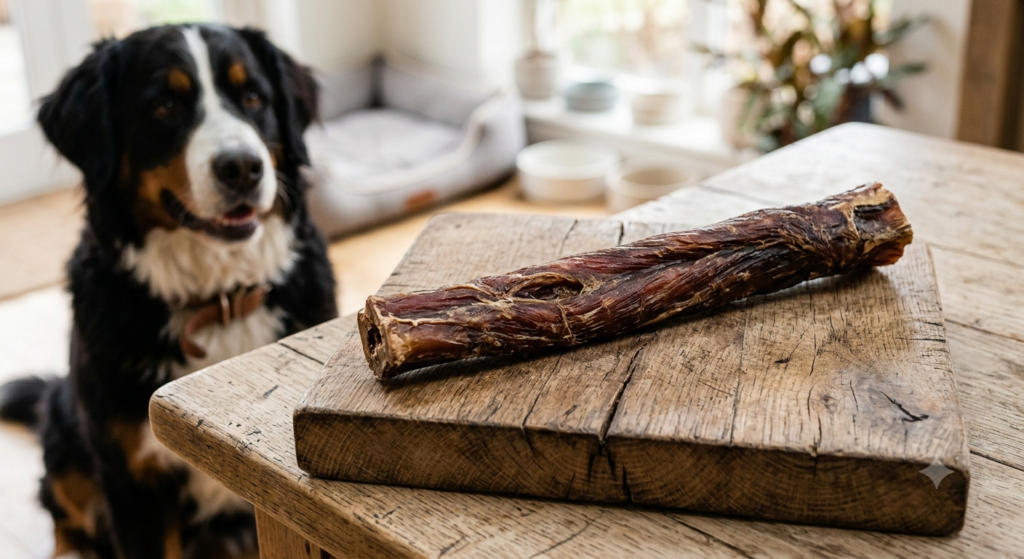
Bully sticks smell because they are made from dried bull or steer pizzle, and unless the manufacturer uses additional processing to reduce odor, the natural smell of the dried muscle tissue remains strong, especially once the stick warms up in your dog’s mouth or sits in a warm room. Some brands reduce this through baking or odor control processing, but no bully stick is ever completely odorless. If the smell is a dealbreaker for your household, a low odor alternative like a yak chew may suit you better.
What a Bully Stick Actually Is?
A bully stick is a single ingredient chew made from dried bull or steer pizzle. It is a legitimate, high protein, mostly digestible chew, and the smell has nothing to do with cleanliness or quality on its own. It is simply the natural odor of the dried tissue itself, similar to how any dried animal product retains some of its original smell unless it goes through additional processing to remove it.
Why the Smell Happens?
The drying process itself
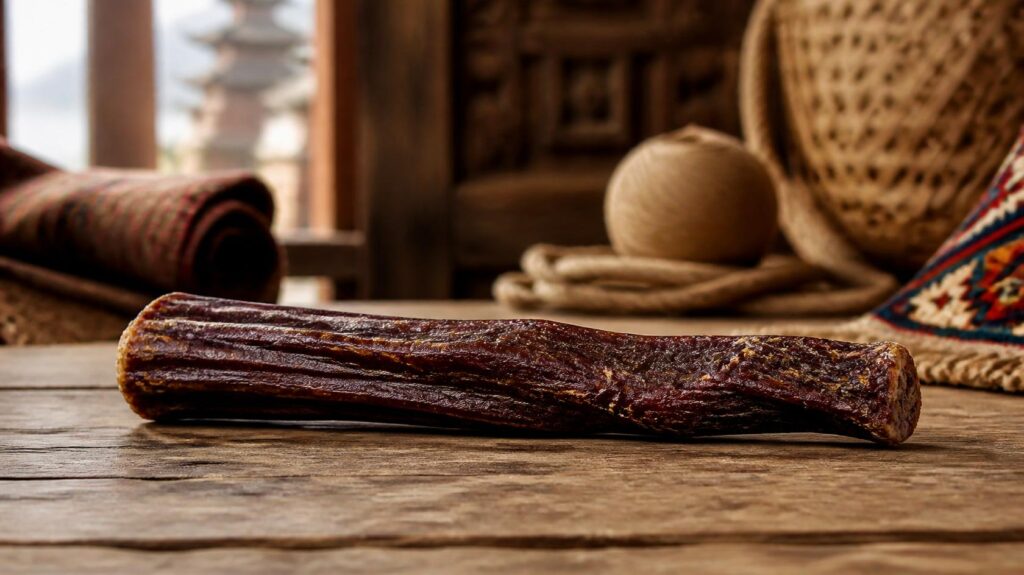
Most bully sticks are air dried or baked at low temperatures. This process preserves the product and makes it shelf stable, but it does very little to neutralize the natural odor compounds already present in the tissue. Compare this to the smoke curing process used for yak chews, where the smoke itself acts as a natural odor suppressant over a period of weeks or months, something we explain in How Organic Mountain Hardwoods Shape the Natural Aroma Profile.
Warmth and saliva
Once a dog starts chewing, the stick warms up and becomes damp with saliva, both of which intensify the smell considerably compared to a cold, dry stick straight out of the package. This is why a bully stick often smells much stronger mid chew than it did in the bag.
Baked versus air dried
Baked bully sticks are generally lower odor than fully air dried ones, since the baking process removes more moisture and some of the compounds responsible for the smell. Even baked sticks are not odorless, they are simply less strong than a traditional air dried version.
Low quality processing
Inconsistent or poorly controlled drying can leave more moisture in the finished product than intended, and higher residual moisture generally means a stronger, more persistent smell, along with a shorter shelf life. This is one of several reasons manufacturing quality varies so much between brands in this category.
How to Reduce the Smell If You Still Want to Use Bully Sticks?
- Choose baked over air dried if odor is a concern, since baking generally produces a milder smell.
- Store sticks in a sealed container rather than an open bag, which limits how much odor spreads through your home between uses.
- Give chews in a well ventilated area or outdoors when possible, particularly during longer chewing sessions.
- Use a designated chew mat or towel to protect floors and furniture from both odor transfer and grease.
- Avoid unusually cheap bully sticks, since inconsistent drying is more common in poorly controlled manufacturing and tends to produce a stronger, less predictable smell along with other quality issues.
If the Smell Is a Dealbreaker, Consider a Low Odor Alternative
If you have tried baked, well stored bully sticks and the smell still bothers your household, a yak chew is worth considering. Yak chews are cured over wood smoke for weeks or months rather than simply dried, which leaves them with very little detectable odor even during a long chewing session. We are not suggesting this because we sell yak chews and not bully sticks. We are suggesting it because it is genuinely one of the more reliable ways to get a similar single ingredient, long lasting chew without the smell being a daily household issue. A full side by side comparison of the two, including odor specifically, is available in Himalayan Chhurpi vs Bully Sticks: The Odor Lifespan and Cleanliness Showdown.
It is worth being clear that a yak chew is a different product with different tradeoffs, not a drop in replacement. It is harder than a bully stick, which means a different safety profile for aggressive chewers or dogs with dental sensitivity.
Common Mistakes When Managing Bully Stick Odor
- Leaving an open bag of bully sticks in a warm room, which allows the smell to spread through the house continuously, not just during chewing.
- Assuming all bully stick brands smell the same. Processing method makes a real, noticeable difference.
- Storing sticks somewhere damp, which can intensify odor and shorten shelf life at the same time.
- Switching straight to a much harder chew like an antler purely to avoid smell, without considering that hardness itself carries a different set of risks worth weighing separately.
Expert Tips
- If odor control matters to you, check the packaging or product description for “baked” or “odor free processing” specifically, rather than assuming all bully sticks are equal.
- Keep a sealed, airtight container as your default storage method regardless of which brand you buy.
- If you switch to a lower odor chew type entirely, introduce it gradually rather than all at once, since it will likely have a different hardness and chewing experience for your dog.
- If the smell coincides with a change in the stick’s texture or unusual sliminess, that may indicate spoilage rather than normal odor, and the chew should be discarded.
Conclusion
Bully stick odor is a normal, expected part of the product, not a sign of poor quality on its own, though processing method and storage do make a real difference in how strong it is. If you have tried the practical fixes above and the smell is still more than your household wants to deal with, a smoke cured, naturally low odor chew like a yak chew is a genuine alternative worth trying, with the understanding that it comes with its own different texture and safety considerations.
Frequently Asked Questions (FAQs)
1. Why do bully sticks smell so bad?
The smell comes from the natural odor of the dried muscle tissue itself, which becomes stronger once the stick warms up and becomes damp with saliva during chewing.
2. Are odorless bully sticks actually odorless?
No. “Odorless” or “low odor” marketing generally refers to baked processing that reduces smell significantly compared to traditional air dried sticks, but no bully stick is fully scent free.
3. Does baking remove bully stick smell completely?
No, but baked bully sticks are noticeably milder than air dried ones, since baking removes more moisture and some of the compounds responsible for the odor.
4. How should I store bully sticks to reduce smell?
Keep them in a sealed, airtight container in a cool, dry place, rather than an open bag in a warm room.
5. Do all dogs’ bully sticks smell the same amount?
No, smell intensity varies by brand and processing method, and also by how warm and saliva soaked the stick becomes during an individual chewing session.
6. Is a smelly bully stick a sign it has gone bad?
Not necessarily, since some odor is normal. A sudden change in smell combined with a slimy texture is a better indicator of spoilage than smell alone.
7. What chew is less smelly than a bully stick?
Yak chews are cured over wood smoke and have very little detectable odor, making them a common choice for households where bully stick smell is a real problem, though they are harder and have a different safety profile.
8. Can I do anything to make my current bully sticks smell less?
Storing them in a sealed container and offering them in a well ventilated area or outdoors can reduce how much the smell spreads through your home, though it will not eliminate the smell of the stick itself.