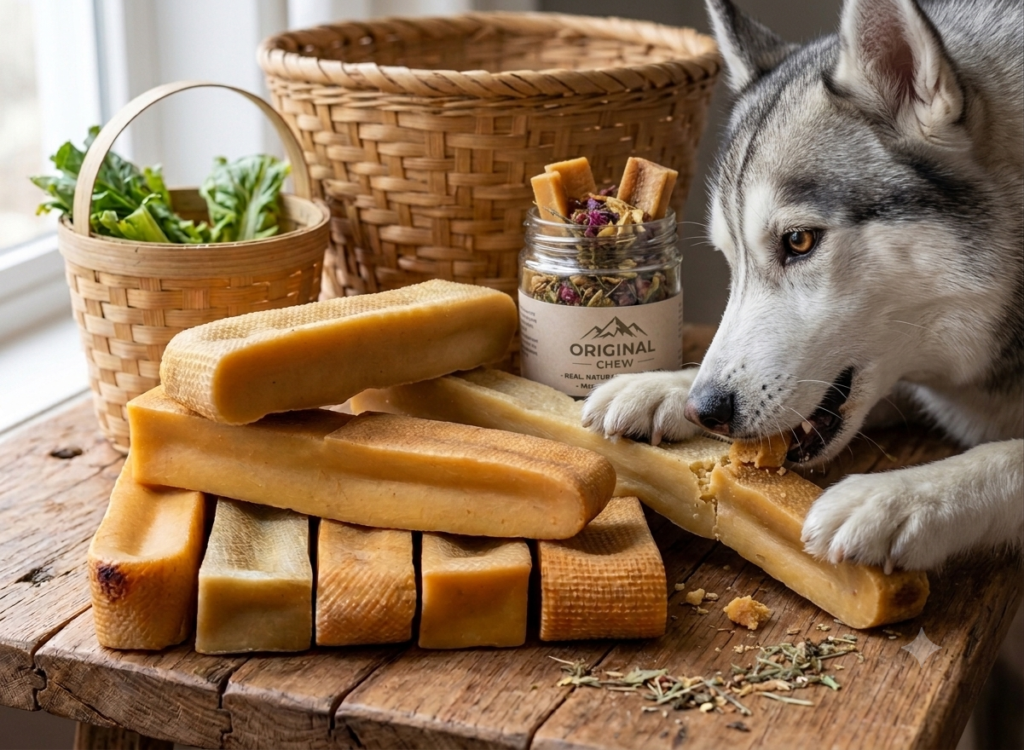
There is no single best chew for every aggressive chewer, because the safest option depends on your dog’s specific bite style, not just how strong their jaw is. Yak chews are a strong option for power chewers who gnaw steadily, since they last a long time and are fully digestible. Antlers and hooves last even longer for the hardest chewers, but carry a higher risk of tooth fracture. The right answer is usually about matching hardness and digestibility to your dog, not picking whatever is marketed as the toughest.
What “Aggressive Chewer” Actually Means
Not all strong chewers chew the same way, and this distinction matters more than most buying guides admit.
- Gnawers apply steady, repeated pressure over a long period. This is the lower risk chewing style, even in a powerful dog.
- Biters clamp down hard and fast, sometimes trying to crack a chew in a single bite. This style is what actually drives most tooth fracture cases, regardless of breed size.
- Swallowers chew quickly and are prone to swallowing pieces before they are small enough to pass safely. This is a choking and obstruction risk more than a dental one.
Knowing which category your dog falls into matters more than knowing their breed, though breed tendencies are a reasonable starting point if you are choosing a chew for the first time.
Comparing the Main Options Honestly
Yak chews
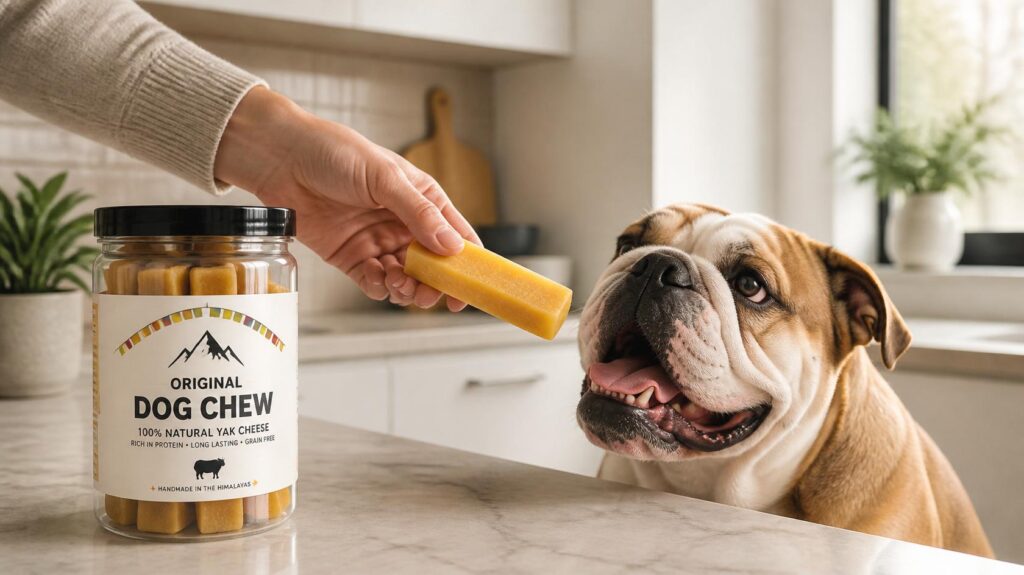
Yak chews are dense, cured dairy blocks that soften gradually as a dog works through them. They are one of the longer lasting options available and are fully digestible, since they are simply hardened milk protein. For a steady gnawer, a properly sized yak chew is one of the safer long lasting options on the market. For a hard biter, there is still a real, if lower than antler, tooth fracture risk.
Antlers and hooves
These are the hardest common chew options and last the longest for genuinely extreme chewers. That durability comes at a cost. Antlers and hooves are considerably harder than yak chews, and the American Veterinary Dental College has published general guidance noting that harder chews of this type are more frequently associated with fractured teeth in dogs who bite down forcefully. Unlike yak chews, antlers and hooves are made of keratin, which is not digestible, so swallowed fragments carry more risk of causing a blockage rather than passing through safely. We compare this specific tradeoff in A Clinical Comparison of Antlers versus Hard Cheese Chews.
Bully sticks
Bully sticks are considerably softer than both yak chews and antlers, and carry a very low tooth fracture risk as a result. The tradeoff is that a genuinely aggressive chewer can work through a bully stick in minutes, which means more frequent replacement and closer supervision near the end of each stick, when the remaining piece becomes both small and soft. See Himalayan Chhurpi vs Bully Sticks: The Odor Lifespan and Cleanliness Showdown for a fuller comparison.
Rawhide
Rawhide is generally not recommended for aggressive chewers specifically, since large pieces can be bitten off and swallowed before they have softened enough to be safely digested, and this is one of the more common causes of chew related emergency vet visits regardless of chew brand.
Rubber and nylon chew toys
These are not consumable chews, but they are worth mentioning honestly, since a genuinely extreme biter may do better with a well reviewed, appropriately sized rubber chew toy designed to withstand hard biting without breaking into swallowable fragments, rather than any edible chew at all. This is a legitimate option we would recommend even though we do not sell one.
Our Honest Recommendation
If your dog is a steady gnawer without a history of dental fracture, a properly sized yak chew is a strong, long lasting, fully digestible option, and it is what we make. If your dog is a hard biter with a history of cracked teeth, we would honestly point you toward a softer bully stick or a non edible rubber chew designed for aggressive chewing, not toward our own product, since a harder chew is not the safer choice for that specific dog. This is also why we do not sell rawhide, antlers, or bully sticks ourselves. We focus on doing one product honestly rather than offering every category and letting you guess which is safest.
Sizing for Power Chewers
Undersizing is one of the most common and most dangerous mistakes owners make with strong chewers. A chew that is even slightly too small for your dog’s mouth becomes a choking risk far sooner than a properly sized one. As a general rule, size up rather than down for any dog known to chew aggressively, and remove any chew once it has worn down to a piece that could be swallowed whole. Our full sizing approach for known power chewer breeds is available in guides.
What to Do If Something Goes Wrong
Even with careful sizing and supervision, aggressive chewers occasionally bite off and swallow a piece larger than intended. If this happens, watch closely for vomiting, gagging, lethargy, or refusal to eat over the following 24 to 48 hours, and contact your veterinarian immediately if any of these appear, since a blockage can become a genuine emergency quickly. We walk through exactly what to watch for in What to Do If Your Aggressive Chewer Swallows a Large Cheese Chunk Whole.
Common Mistakes Owners of Aggressive Chewers Make
- Choosing the hardest available chew, assuming hardness alone equals safety, when it often increases tooth fracture risk instead.
- Leaving a strong chewer unsupervised with any chew type, especially a new one they have not tried before.
- Not replacing a worn down chew quickly enough once it becomes small enough to swallow.
- Buying a cheap, poorly sourced chew that is more likely to splinter or break into sharp fragments rather than wearing down predictably.
- Assuming one chew type will work for every dog in a multi dog household, rather than matching each dog’s individual chewing style.
Expert Tips for Managing Power Chewers
- Identify whether your dog is a gnawer, a biter, or a swallower before choosing a chew type, since this matters more than breed or size alone.
- Rotate chew types to avoid constant exposure to the hardest end of the spectrum.
- Always supervise a new chew type for at least the first several sessions.
- Ask your veterinarian for a direct recommendation if your dog has ever cracked a tooth or swallowed a large piece before.
Conclusion
The best chew for an aggressive chewer is the one that matches how your specific dog actually chews, not the hardest or longest lasting option on the shelf. Yak chews are a strong, fully digestible choice for steady, powerful gnawers, while dogs who bite down hard and fast may genuinely be safer with a softer option we do not sell ourselves. Being honest about that tradeoff is more useful to you than pretending one product fits every dog.
Frequently Asked Questions (FAQs)
1. What is the best chew for a dog that destroys everything?
There is no single best option for every dog. A steady gnawer generally does well with a yak chew, while a hard biter may be safer with a softer bully stick or a rubber chew toy designed for aggressive chewing.
2. Are yak chews good for aggressive chewers?
Yes, for dogs who gnaw steadily rather than bite down hard and fast. Yak chews are long lasting and fully digestible, though any hard chew carries some tooth fracture risk for a genuinely hard biter.
3. Are antlers safer than yak chews for power chewers?
Not necessarily. Antlers last longer but are harder, which generally increases tooth fracture risk, and they are not digestible if swallowed in pieces.
4. What chew lasts the longest for aggressive chewers?
Antlers and hooves typically last the longest due to their density, followed by yak chews, with bully sticks lasting the shortest amount of time for a strong chewer.
5. Is rawhide safe for aggressive chewers?
Generally not recommended, since large pieces can be bitten off and swallowed before softening enough to digest safely.
6. How do I know if my dog is a dangerous aggressive chewer?
Watch for biting down hard and fast rather than gnawing, swallowing large pieces quickly, or a history of vomiting or lethargy after chewing, and discuss this pattern with your veterinarian.
7. Can aggressive chewers safely use any natural chew?
Not without supervision and correct sizing. Even softer chews carry a choking risk once worn down, and harder chews carry a fracture risk, so supervision matters regardless of chew type.
8. Should I avoid all hard chews for a known aggressive chewer?
Not necessarily, but a dog with a history of tooth fracture should generally move to softer options, and this is worth confirming with your veterinarian directly.