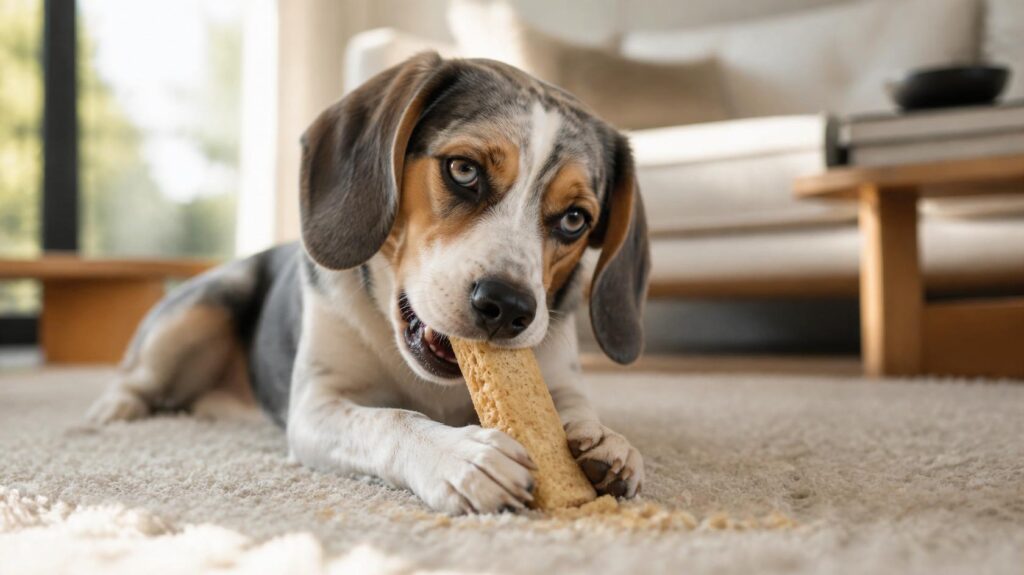
Yak chews are generally safe for most healthy adult dogs when sized correctly and supervised, because they are a single ingredient, naturally hard dairy product with no additives. The main risks are choking on a softened nub near the end of the chew and, less commonly, tooth fracture in dogs who chew very hard. Puppies, senior dogs, and dogs with certain dental or digestive conditions need extra caution or a different chew entirely.
What Yak Chews Actually Are
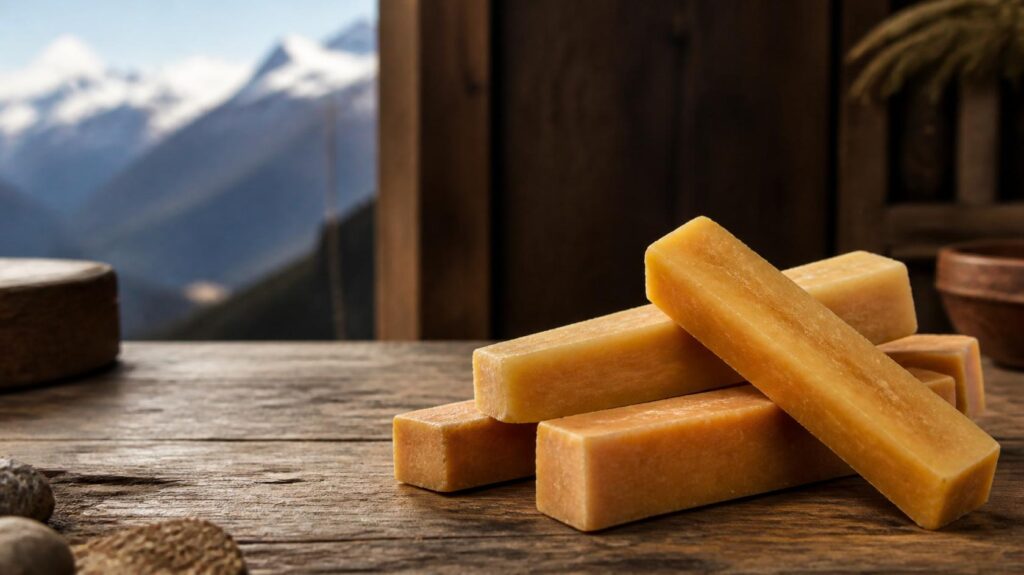
A yak chew, sometimes labeled a Himalayan chew or chhurpi, is made from yak milk, often blended with cow milk in the traditional recipe, that has been curdled, pressed, and slow cured over wood smoke until it hardens into a dense block. The process began as a way for herders in the high Himalayas to preserve milk through long winters, not as a product designed for pets. Dogs chewing on the leftover pieces is a tradition that predates the commercial pet industry by centuries, something we cover in more detail in Behind the Smoke: How Traditional Farmers in Nepal Age Authentic Chhurpi.
Because the only real ingredients are milk, a small amount of lime juice or salt used in traditional curdling, and smoke, a properly made yak chew has a very short, recognizable ingredient list. That single ingredient nature is one reason many owners view yak chews favorably compared to heavily processed treats, but it does not automatically mean risk free for every dog.
How Yak Chews Compare to Other Hard Chews?
Safety in dog chews is almost always a tradeoff between durability and hardness. The harder and longer lasting a chew is, the more force it can put on teeth.
- Yak chews are hard but slightly less dense than deer or elk antler, and they soften as your dog works through them, which reduces fracture risk compared to antlers over time.
- Bully sticks are much softer and lower risk for tooth fracture, but they break down faster and carry a higher choking risk near the end if swallowed whole.
- Rawhide carries different risks, mainly around digestibility and large pieces being swallowed rather than chewed.
- Antlers and hard cheese chews sit at the harder end of the spectrum and can splinter eaasily.
If your dog has already cracked a tooth on a hard chew, or is a known aggressive chewer who tries to bite through items in seconds rather than gnaw over time, a softer option than yak chews may be the safer recommendation, even though it is not our product. Being honest about that tradeoff matters more than selling a chew.
Benefits of Yak Chews
- Long lasting. A properly sized yak chew can occupy a dog for weeks depending on chewing intensity, which reduces the frequency of choking incidents that tend to happen more with fast consumable treats.
- Single ingredient. No fillers, preservatives, or artificial flavoring in an authentic, minimally processed chew, a point we unpack further in the Risk of Synthetic Binding Agents in Commercial Dog Treats.
- Low odor. Unlike some bully sticks, yak chews have very little smell.
- Relatively low in fat. Compared to many rendered animal chews, yak chews sit lower on the fat scale, which can matter for dogs prone to pancreatitis, a topic covered clinically in the Merck Veterinary Manual’s section on canine pancreatitis. Portion size still matters regardless of fat content.
- Dental benefit potential. The mechanical action of gnawing on a firm surface can help reduce plaque and tartar buildup over time, though it is not a substitute for brushing or professional dental care, a distinction Cornell University College of Veterinary Medicine makes clear in its client education materials on canine dental health.
Safety Considerations and Risks
Choking on the softened nub
As a dog works through a yak chew, the remaining piece eventually becomes small enough and soft enough to be a choking hazard if swallowed whole. This is the most common real world safety issue with yak chews, not tooth fracture. Once the chew has worn down to a size that could fit fully in your dog’s mouth, take it away or turn it into a puffed treat instead.
Tooth fracture in aggressive chewers
Dogs who bite down hard and fast, rather than gnaw gradually, are at higher risk of slab fracturing a premolar on any hard chew, including yak chews.
Digestive upset
Some dogs, particularly those with dairy sensitivity, can experience mild digestive upset from yak chews. Traditional curing reduces lactose content compared to fresh milk, but it does not eliminate it entirely. Introduce a new chew gradually and watch for soft stool or vomiting in the first few uses. If your dog has a known sensitive stomach, start with our dedicated guide on Yak Chews for Dogs with Delicate Sensitive Stomachs?
Not appropriate for every dog
- Puppies under six months with baby teeth should not be given hard chews.
- Senior dogs with periodontal disease or worn teeth may be more prone to fracture and may do better with a softer chew.
- Dogs on a strict low fat or low protein prescription diet should have a vet confirm that yak chews fit within their dietary plan.
- Dogs with a diagnosed dairy allergy should avoid yak chews entirely, as they are a dairy product regardless of processing.
Common Mistakes Owners Make
- Giving a chew that is too small for the dog’s size, increasing choking risk immediately.
- Leaving a dog unsupervised with any hard chew, especially early on before you know how that individual dog chews.
- Not removing the nub once it becomes small enough to swallow whole.
- Assuming all yak chews are equivalent. Quality varies significantly between brands depending on curing time and ingredient purity.
- Introducing a hard chew to a puppy before adult teeth are in.
Expert Tips for Safer Chewing
- Match chew size to your dog’s weight and jaw size, sizing up rather than down if you are unsure.
- Supervise the first several sessions with any new chew.
- Remove and replace the chew once it has worn down to a swallowable size.
- Rotate chew types so your dog is not exposed to the same hardness profile constantly.
- Ask your veterinarian directly if your dog has a history of dental disease, pancreatitis, or dairy sensitivity before introducing yak chews.
Conclusion
Yak chews are a genuinely simple, minimally processed option that suits most healthy adult dogs well, provided the size is right and the chew is retired once it becomes small enough to swallow. They are not automatically the right choice for every dog, and puppies, dogs with dental disease, and dogs with dairy sensitivity are worth a conversation with your veterinarian first. The goal is not to find a chew that works for every dog everywhere, but to find the one that fits your dog specifically.
Frequently Asked Questions (FAQs)
1. Are yak chews safe for puppies?
Only once adult teeth have fully come in, generally after six months of age, and even then a smaller, softer sized chew is safer than a full sized adult chew.
2. Can yak chews cause diarrhea?
Occasionally, particularly in dogs with dairy sensitivity or when introduced too quickly. Start with short supervised sessions and watch for digestive changes.
3. Do yak chews expire or go bad?
Properly cured and stored yak chews have a long shelf life, but they should be kept dry, since moisture can lead to mold growth on a dairy based product.
4. What do I do with the small piece left at the end?
Take it away once it is small enough to be swallowed whole, or microwave it briefly to puff it into a crunchy treat instead.
5. Are yak chews better than bully sticks?
Neither is universally better. Yak chews last longer and have less odor, while bully sticks are softer and lower risk for tooth fracture. The right choice depends on your dog’s chewing style and any dental history.
6. Can senior dogs have yak chews?
Many can, but dogs with periodontal disease, missing teeth, or general dental fragility may do better with a softer chew. Ask your veterinarian if you are unsure.
7. Do yak chews cause tooth fractures?
Any hard chew can, particularly in dogs who bite down hard rather than gnaw gradually. The risk is lower than with antlers but not zero.
8. How long does a yak chew actually last?
This depends heavily on the individual dog’s chewing intensity, ranging from days for a determined power chewer to weeks or longer for a casual chewer.
9. Are yak chews safe for dogs with allergies?
They are safe for most dogs, but not for dogs with a confirmed dairy allergy, since yak chews are a dairy product regardless of how minimally processed they are.
10. Do vets recommend yak chews?
Many veterinarians view yak chews favorably compared to heavily processed treats because of the short ingredient list, but recommendations vary by individual dog and any existing dental or digestive conditions. Always check with your own vet for your dog specifically.